Investing · 04 / 05
What are dividends?
How companies share profits with shareholders — what a dividend is, what it is not, and what to watch.
In this article
Where to begin
A dividend is a distribution of cash (or sometimes other assets) a company pays to shareholders. It is not bank-deposit interest: it depends on the company’s decision and its ability to generate cash.
Dividends can feel rewarding. On their own, they do not make an investment “safe” or “good”.
The idea
When a company has profits and available cash, the board may:
- reinvest in the business;
- reduce debt;
- buy back shares;
- pay dividends;
- or combine several options.
A dividend is a capital-allocation choice — not a permanent obligation.
How it works
If you hold shares on the relevant record date, you are entitled to the declared dividend. The amount typically appears in your brokerage account after the payment date (minus withholding tax, depending on jurisdiction).
On the ex-dividend date, the share price tends to adjust by roughly the dividend amount. In plain terms: you receive cash, but the market price usually reflects that cash leaving the company.
Yield and quality
Dividend yield relates annual dividends to the current price. A high yield can mean generosity — or a price that fell because the market doubts the payment can last.
A simple example
You hold 100 shares. The company declares a €0.50 dividend per share. In theory you receive €50 gross (before tax and fees). If the price was €25 and the market adjusts by about €0.50 on the ex-date, the quote may move near €24.50 all else equal.
Figures are illustrative. In practice, many other forces move the price the same day.
What to watch
- Coverage by earnings and cash — is the dividend sustainable?
- History — stability, growth, or prior cuts.
- Payout — how much of earnings (or FCF) is distributed.
- Tax — withholding and treatment in your country.
Common mistakes
- Buying only the highest yield on a list.
- Ignoring that a dividend cut can coincide with a falling price.
- Counting dividends as “extra profit” without looking at total return (price + dividends).
- Forgetting taxes and FX.
Risks and limits
Dividends can be reduced or cancelled. Indebted or cyclical companies often cut in stress. An attractive yield does not protect against capital loss.
Next step
Valuation basics →Recommended reading
A few books that can help you go deeper on this topic.
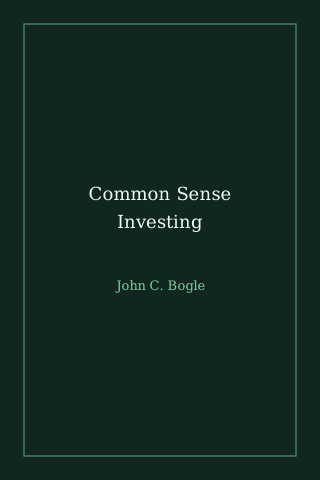 The Little Book of Common Sense Investing
John C. Bogle
A clear case for broad diversification, low costs, and patience in investing.
Why this book? Useful when you want to see why time and simplicity matter more than noise.
View book
Keep learning
A clear explanation of what it means to own shares — partial ownership, risk, and what a stock is not.
How to separate price from value and read earnings, cash flow, multiples, and expectations.
Next Valuation basics
Learn is general educational content. It is not personalised advice and does not guarantee outcomes.